Cosmic Starship is a space opera, but its first flagship is named after a real rocket, and half the team watches every launch. These are our notes on real spaceflight: what happened, why it matters, and where it found its way into the game.
 The ship came home: Starship Flight 15 and the first upper-stage catchThe tower caught a Starship upper stage for the first time in November 2026, and the booster did not make it back. What happened, how the programme got here, and what is still unsolved.
 Thirty-seven flights on one booster: Falcon 9 reuse up closeWhat gets reused, what happens between flights, what has gone wrong, and why reuse changed how we design our own fleet.
- Where Artemis stands in late 2026: Artemis II flown, Artemis III now an orbit testArtemis II flew; Artemis III no longer lands. What changed in 2026, the date dispute, and the real bottlenecks.
- What Artemis II Actually Did: Crew, Lunar Flyby, Heat Shield and ProblemsArtemis II flew around the Moon 1-10 April 2026. What it proved, what went wrong, and what NASA said afterward.
 The future of space travel: what to expect through the 2030sConfirmed 2026 facts, official targets and plain speculation, separated, with what to watch.
 How a Spaceship Turns, Stops and Aims in VacuumThrusters, gyros and flips: how real spacecraft turn and brake without air, and why games bend the rules.
 Spaceship propulsion types: chemical, ion, nuclear, sail and fusion comparedChemical, ion, nuclear thermal, sails and fusion: what each does, with real missions and approximate numbers.
 Starship Flight 15 explained: ship caught, booster lost, what comes nextShip caught after 22 hours in orbit, booster lost in the Gulf. What counts as success, what failed and what is still unconfirmed.
 Starship orbital refueling explained: why the Moon landing depends on itShip-to-ship refueling is unproven. What it is, what is tested, and why launch counts are only estimates.
- Starship vs Saturn V and SLS: Height, Thrust, Payload and Reuse ComparedStarship V3 against Saturn V and SLS on height, thrust, payload and reuse, with unverified numbers flagged.
- What a Rocket Launch Really Costs, and Whether Reuse Is CheaperPrice, cost and marginal cost for Falcon 9, SLS and Starship, with the date and source of each number.
- What spaceships are made of: steel, tiles, ablators and aluminumSteel, tiles, Avcoat, aluminum-lithium and composites: why each material is used, with real examples.
Why a game studio writes about rockets
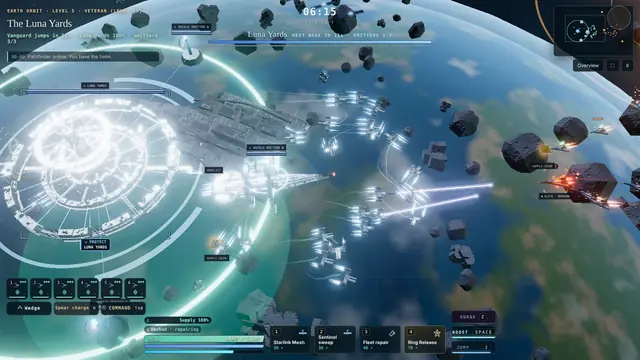
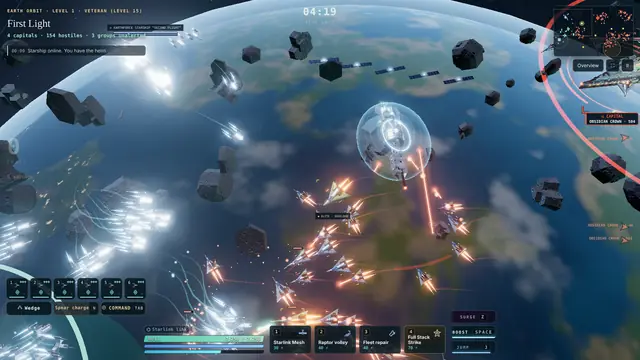
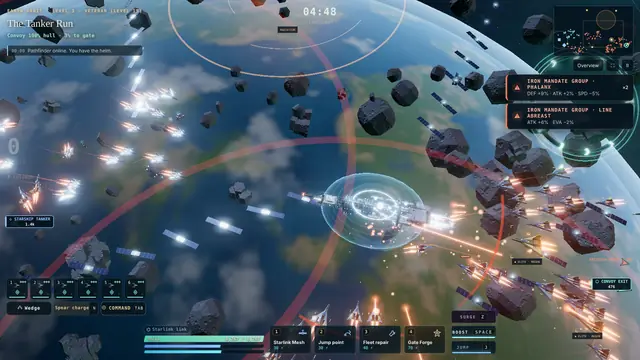
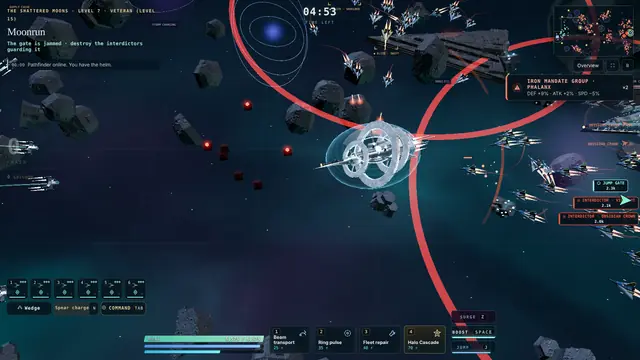
Earthforce, the human navy in the game, flies ships called the Starship and the Falcon Heavy, fires Raptor volleys and throws up a Starlink mesh around its flagship. Those names began as a fan tribute. The longer we worked on the game, the more of the real engineering leaked into the rules: a passive called Rapid reuse, a booster that flies home after you throw it, a relief ship that rests and repairs while another one fights.
So we try to understand the real thing properly, and writing it down is how we check that we have. We are not journalists and we are not insiders. We read the public reporting, compare sources, link them at the bottom of every note, and say so when something is uncertain. If you spot a mistake, the contact page reaches us, and we will correct it and note the change.
Cosmic Starship is an independent game. It is not affiliated with, endorsed by or sponsored by SpaceX or any other launch company.